
In the field
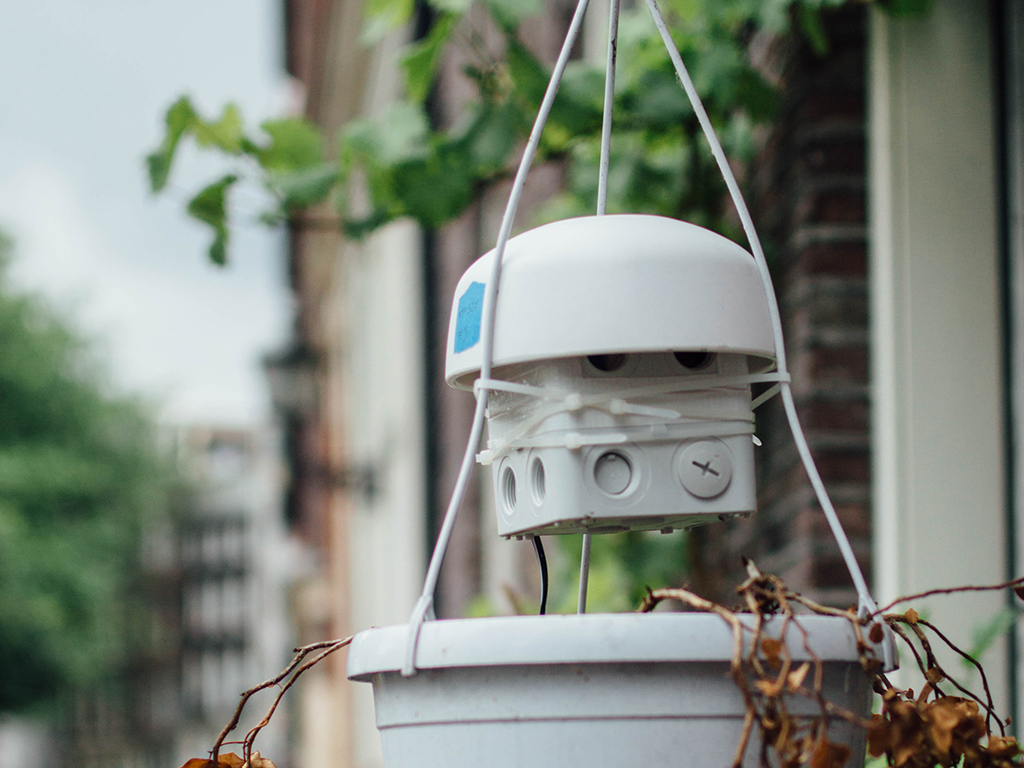
Measurement, at street level.
A sensor installed outside an Amsterdam home during Urban AirQ. The pilot connected environmental measurement with the people living around Valkenburgerstraat and Weesperstraat.
The question
How can people take part in understanding the air quality in their own neighbourhood? Urban AirQ brought this question to Valkenburgerstraat and Weesperstraat in central Amsterdam.
The work
The 2016 pilot, organised through Waag’s Amsterdam Smart Citizens Lab, involved residents in air-quality measurement. Participants helped explore where sensors should be placed and what should be measured.
Technical approach
Local sensing and citizen participation connected environmental measurements with the questions of the people living nearby. The pilot’s results were shared and contributed to the wider Making Sense programme.
Significance
Urban AirQ illustrates an approach to applied science in which collecting data and involving communities are part of the same process. It shows why environmental monitoring benefits from local knowledge alongside technical measurement.
Context
Citizen science / Amsterdam
Period
2016
Programme
Waag’s Amsterdam Smart Citizens Lab
Making Sense
Participants
Local residents and the Urban AirQ project team
Methods
Air-quality monitoring
Environmental sensing
Participatory measurement
References
Start a conversation
A difficult problem is a good place to start.
Tell us what you’re working on. We welcome technical challenges, research collaborations and new partnerships.