
Published evidence
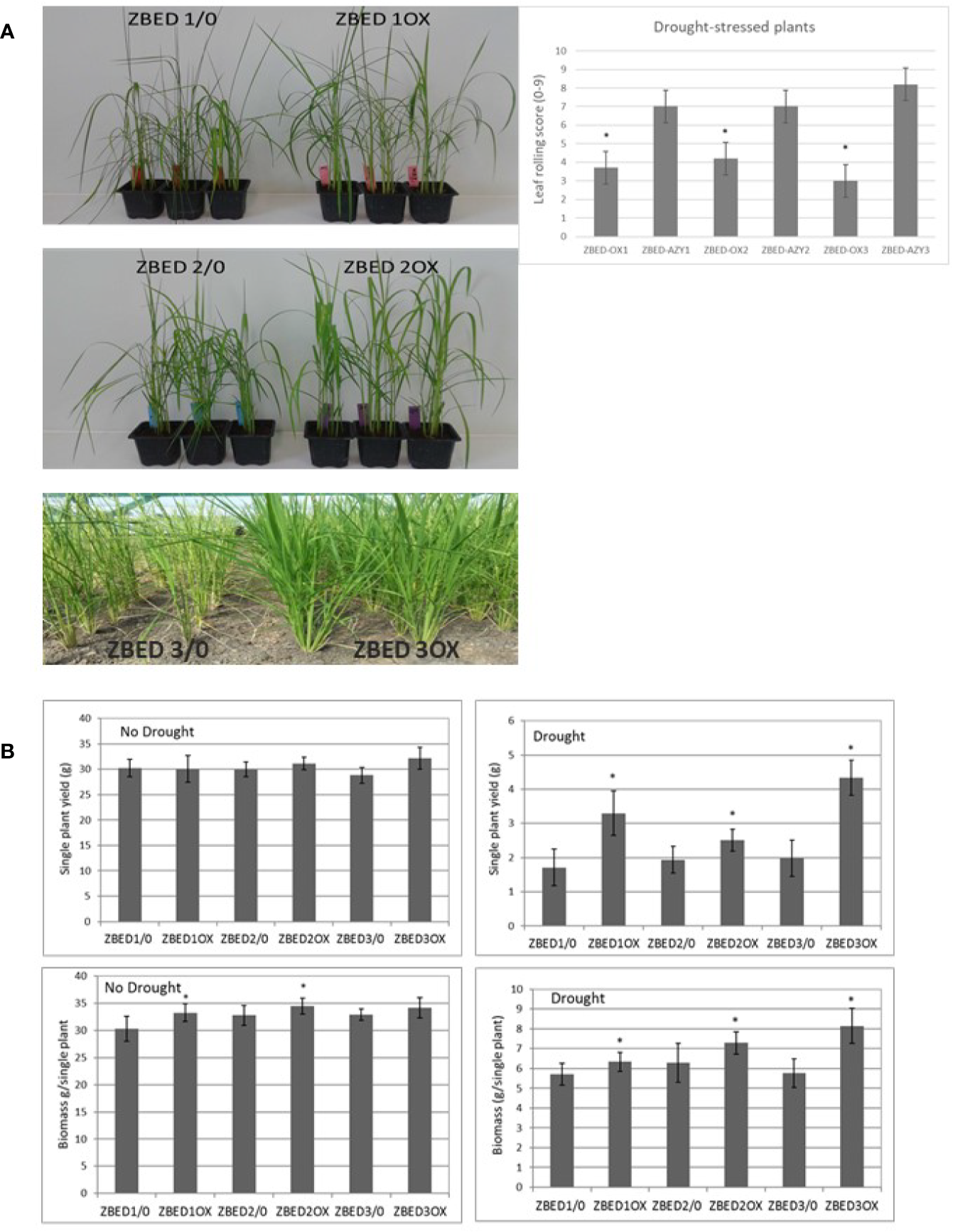
A visible difference under drought.
The original experiments compared rice plants with and without ZBED overexpression. The published results connect this factor with drought tolerance and disease resistance, supported by greenhouse and field observations.
The question
Plants face environmental pressures such as drought alongside biological threats such as pathogens. Improving tolerance to one can come at the expense of resistance to the other.
Research contribution
Research led by Paola Zuluaga at INRA in France during 2016–2018 investigated this intersection in rice. It identified a role for the DNA-binding protein ZBED in the response to both disease and drought. This is earlier scientific research, carried out at INRA before Zephyros Solutions was founded.
Technical approach
The study examined ZBED’s zinc-finger BED domains, DNA binding and immune activity, alongside experiments on disease resistance and drought response in rice.
Outcome & significance
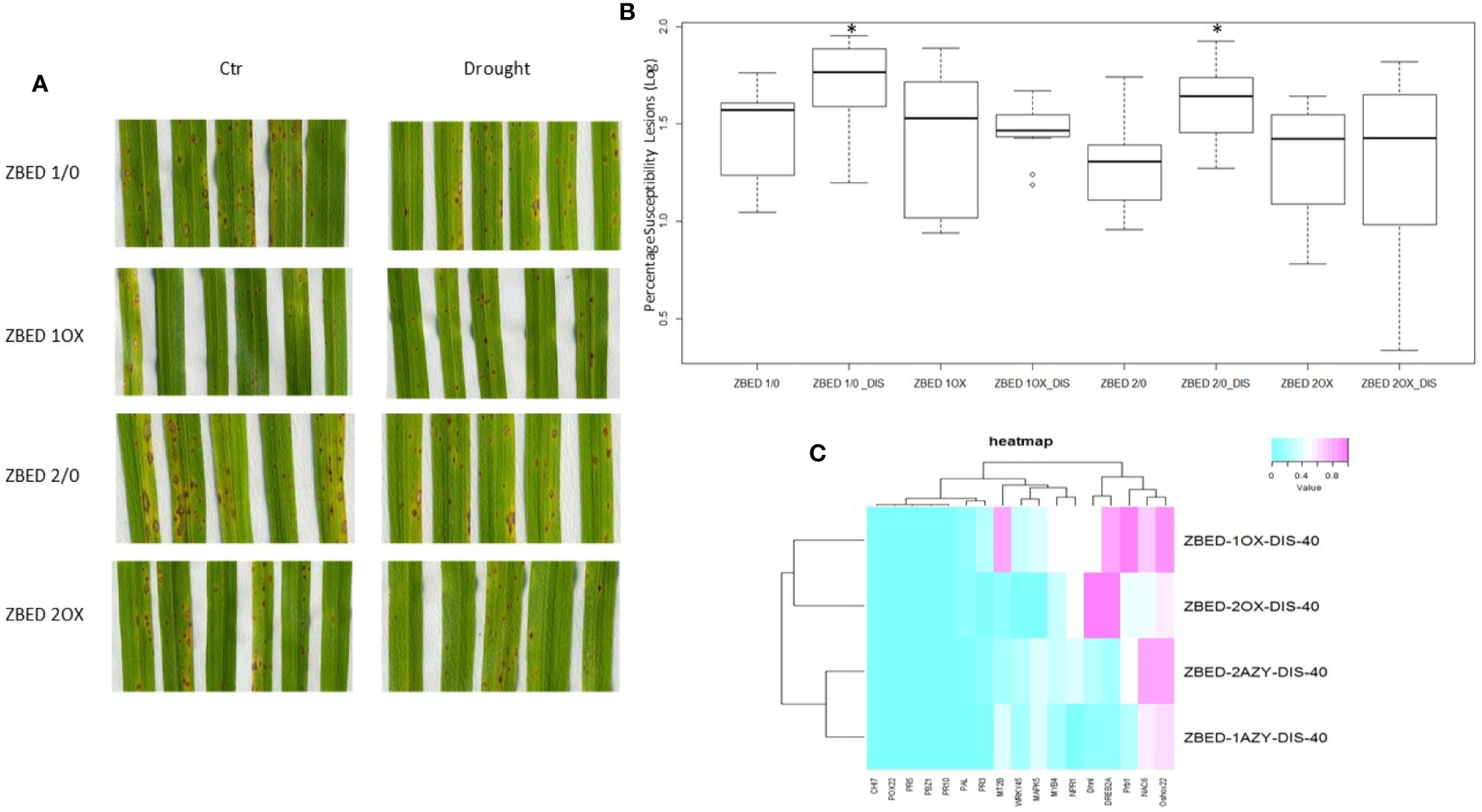
The published work found that ZBED-overexpressing rice lines showed greater drought tolerance while maintaining disease resistance after mild drought. It points to a potential route for understanding simultaneous responses to abiotic and biotic stress, rather than treating them in isolation.
Disease resistance after drought
A closer look at the results
Research setting
INRA, France
Period
2016–2018
Publication: 2020
People
A. Paola Zuluaga and co-authors
Methods
Molecular biology
DNA-binding proteins
Plant–pathogen interactions
Drought-response analysis
Publication
Start a conversation
A difficult problem is a good place to start.
Tell us what you’re working on. We welcome technical challenges, research collaborations and new partnerships.